



Skull model of a kanglion
This is a model of the skull of a kanglion. The most prominent feature of the bag lion is its large, scissor-like split meat teeth (located on the sides of the upper and lower jaws), and large front, rodent or primate-like incisors, rather than the canines of modern cats. It was not a real lion, but a carnivorous marsupial that lived in Pleistocene Australia. It is the largest carnivorous mammal in Australian history. It has a strong bite force and can hunt prey much larger than its own size.

Cave bear skull fossil
This is a fossil skull model of a cave bear. The cave bear (scientific name: Ursus spelaeus) is a bear that lived in Europe and Asia during the Pleistocene and became extinct about 20,000 years ago during the Ice Age. They are much larger than today's brown bears, standing up to 10 feet (about 3 meters) tall and weighing more than 1600 pounds (about 725 kilograms). Because most of their fossils were found in caves, they showed that they were more dependent on caves for habitat and hibernation than existing brown bears, hence the name "cave bear".

Fossilized skull of a forest australopithecus
This is the skull of a forest ancient ape (Proconsul), which is also known as the original Kangshul ape. They are extinct Australopithecus, living in eastern Africa about 23 million to 14 million years ago, and are considered to be one of the common ancestors of apes and humans. They have limb bones similar to those of monkeys, but no tails, and the tooth structure shows that they are fruit-eating apes.
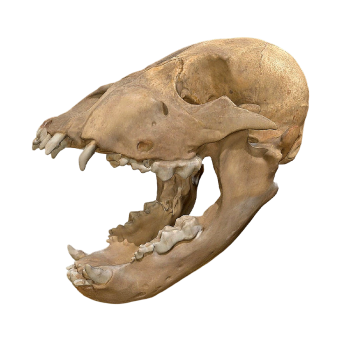
Cougar Skull
This is the skull of a cougar (American Lion). The cougar (Panthera leo atrix) is an extinct species of feline, one of the largest known. They lived during the Pleistocene (Pleistocene) and became extinct about 10,000 years ago. The cougar was found primarily in North America, from Alaska to Mexico, and was a predator at the top of the North American food chain at the time. As pure carnivores, their tooth structure is ideal for piercing and tearing meat, and their canines are large.

The skull of a cow
A group of animals belonging to the order Artiodactyla, family Oxidae, and subfamily Oxinae, commonly known as "cattle", with a total of 5 genera. Most of them are large to extremely large herbivorous animals. This includes African buffalo and American bison, as well as yellow cattle, water buffalo, and yaks that are very important to humans. Habitats vary greatly among different species. It can survive in grasslands, savannas, wetlands, tropical rainforests, and temperate forests. Bison are highly social animals. Cattle are herbivorous animals that feed on open grassland habitats. As herbivores, they consume high fiber vegetation, which contains more cellulose and lignin than forest animals.

White tailed deer skull
White tailed deer is an animal belonging to the subfamily of hollow toothed deer and the genus of hollow toothed deer. The white tailed deer has a wide white tail, with a slightly reddish brown fur in summer and a slightly gray brown fur in winter. White tailed deer have strong adaptability and are distributed in most parts of North America, northern South America, and Africa. They mainly live in forests, swamps, tundra, and even deserts. White tailed deer are also common in the United States, usually living alone or in groups of one male deer and two or three female deer.
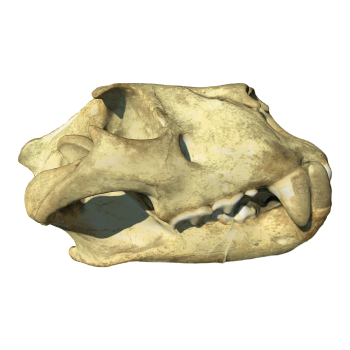
Lion Skull Specimen from Auckland Museum

Popular Models
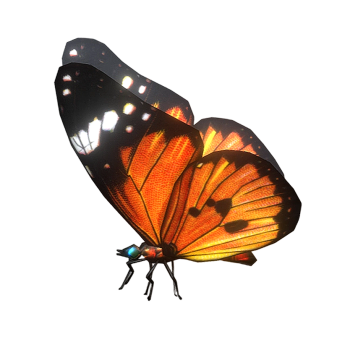
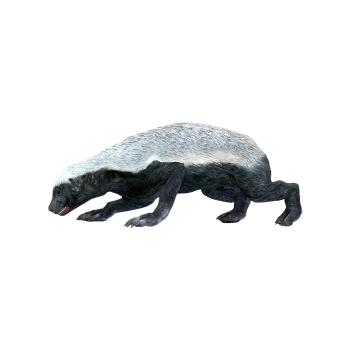
Honey Badger (3D animated model)
192 View
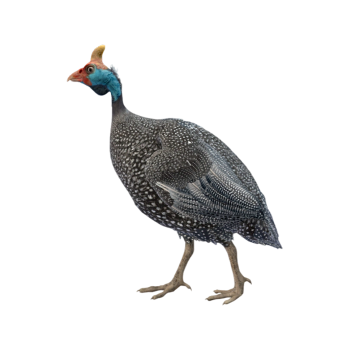
Guinea fowl (3D animated model)
163 View
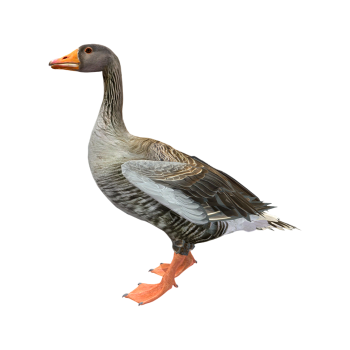
Wild Goose (3D animated model)
185 View
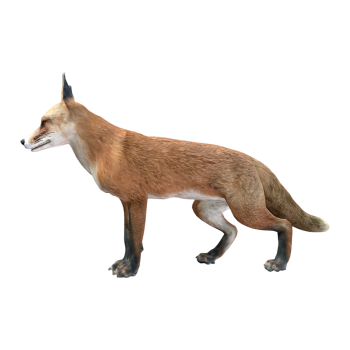
Red Fox (3D animated model)
153 View
Random Model

Specimen of Fa
810 View

Inuit carpets of reindeer bones
421 View

armchair
489 View

Sagittal view of skull and mandible
618 View

Floor lamp
573 View

Arab Antique Aden Dagger
726 View

Wood Carving of Buddha Head
539 View